Childhood Emotional Neglect Quiz: A Free 25-Question Self-Check (With Scoring Guide)
Childhood Emotional NeglectSelf-CheckHealing
Quick answer
Is there an official childhood emotional neglect test?
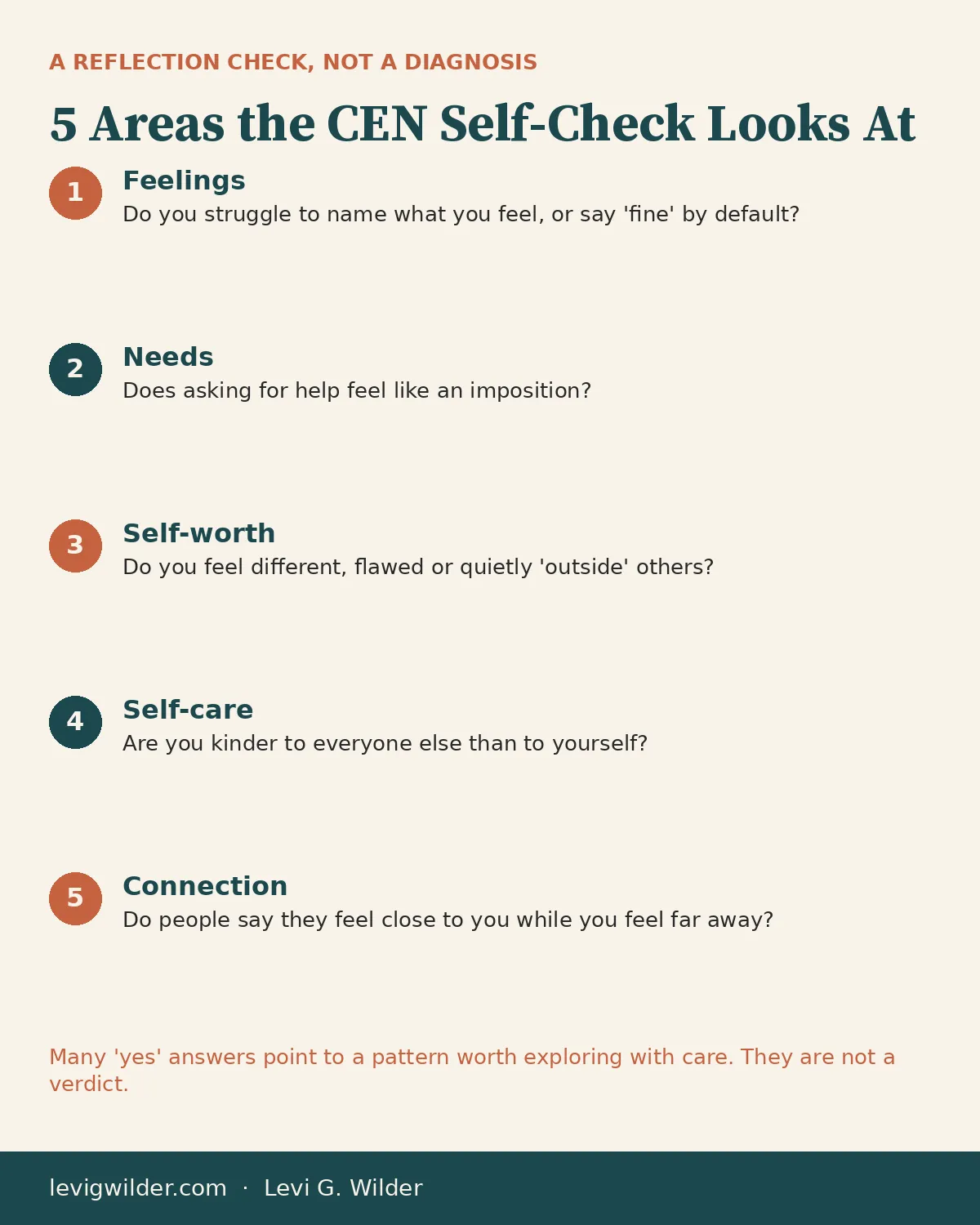
There is no official online test for childhood emotional neglect. Researchers use validated tools such as the Childhood Trauma Questionnaire. This free 25-question self-check looks at five present-day areas instead: feelings, needs, self-worth, self-care and connection. Use your score for reflection only, and see a licensed professional for a proper assessment.
By Levi G. Wilder. I'm a researcher and survivor, not a therapist. This self-check is for reflection only. It is not a diagnostic test and does not replace an assessment by a qualified professional.
Most people who search for a childhood emotional neglect quiz aren't looking for a label. They're looking for permission: a sign that the vague, hard-to-explain feeling they carry is real and has a name.
I wrote this self-check for that person. It's original (I don't reproduce copyrighted clinical questionnaires), it's short, and it's built around the five areas where emotional neglect most often shows up in adult life. Take your time. There are no right answers, and nobody will see your score.
Before you start: what this quiz can and can't do
Researchers measure childhood maltreatment with validated tools such as the Childhood Trauma Questionnaire, which includes an emotional neglect scale (Bernstein et al., 2003). Those tools are used in studies and clinics under specific conditions. This self-check is different. It doesn't look back at your childhood events. It looks at adult patterns that often grow out of emotional neglect.
That's deliberate. Memory is a messy witness. One major study found poor agreement between what people remember about childhood maltreatment and what was recorded at the time (Baldwin et al., 2019). Emotional neglect, being an absence, leaves even fewer memories. Patterns in the present are often easier to see.
So treat your result as a flashlight, not a verdict.
How to take it
Read each statement and give it a number:
- 0 = rarely or never true for me
- 1 = sometimes true
- 2 = often or almost always true
Grab a notebook, or just keep a running total in your head for each section.
Part 1: Feelings
- When someone asks how I feel, my honest answer is "I don't know" or "fine".
- I notice my emotions late, often only once they've become overwhelming.
- I feel uncomfortable when other people show strong emotions around me.
- I sometimes feel empty or numb, without being exactly sad.
- I tend to explain my feelings away ("I'm just tired") rather than feel them.
Part 2: Needs
- Asking for help feels like an imposition, even for small things.
- I'd rather struggle alone than let someone see that I'm struggling.
- I have trouble knowing what I want, even in simple choices.
- When someone offers support, I feel awkward, guilty or suspicious.
- I feel like I should be able to handle everything myself.
Part 3: Self-worth
- I quietly feel different from other people, as if something is missing in me.
- I'm much harder on myself than on anyone else.
- Praise makes me uncomfortable, or I don't really believe it.
- I feel I have to earn my place in relationships by being useful.
- Deep down, I'm not sure my feelings matter much.
Part 4: Self-care
- I push through hunger, tiredness or illness until I can't anymore.
- Rest feels like something I have to justify.
- I struggle to comfort myself when I'm upset, beyond distracting myself.
- I'm much better at noticing other people's needs than my own.
- When I make a mistake, I go quiet and harsh with myself rather than kind.
Part 5: Connection
- People say they feel close to me, while I feel somewhat far away from them.
- I share facts about my life more easily than feelings.
- In conflict, I shut down, smooth things over, or leave.
- I'm either very independent in relationships or anxious about being left, with not much in between.
- When I was growing up, I don't remember being asked what was going on inside me.
Scoring guide
Add up your numbers. The maximum is 50. Also look at each part separately (maximum 10 each), because your pattern matters more than the total.
0–12: Few signs right now
These patterns don't seem central for you at the moment. You might still recognize a few, which is completely human. If a specific part scored 5 or more, that area may still be worth some attention.
13–25: Some signs
Several patterns that often follow emotional neglect show up in your life. This doesn't mean your childhood was bad, only that some emotional skills may not have been taught fully. That's good news, in a way: skills can be learned at any age.
26–37: Many signs
Emotional neglect may well be part of your story. Many people in this range describe a lifelong feeling of running on reserve power, being capable and reliable while feeling unseen. Consider reading more, working through structured exercises, and, if possible, talking with a therapist.
38–50: Strong pattern
These patterns are shaping a lot of your daily life. Please be gentle with how you read that. It's not a diagnosis and not a failure. It suggests you've been carrying a lot alone, possibly for a long time. Support from a qualified professional can make a real difference, and you deserve it.
Reading your highest section
Your highest-scoring part is usually the best place to start:
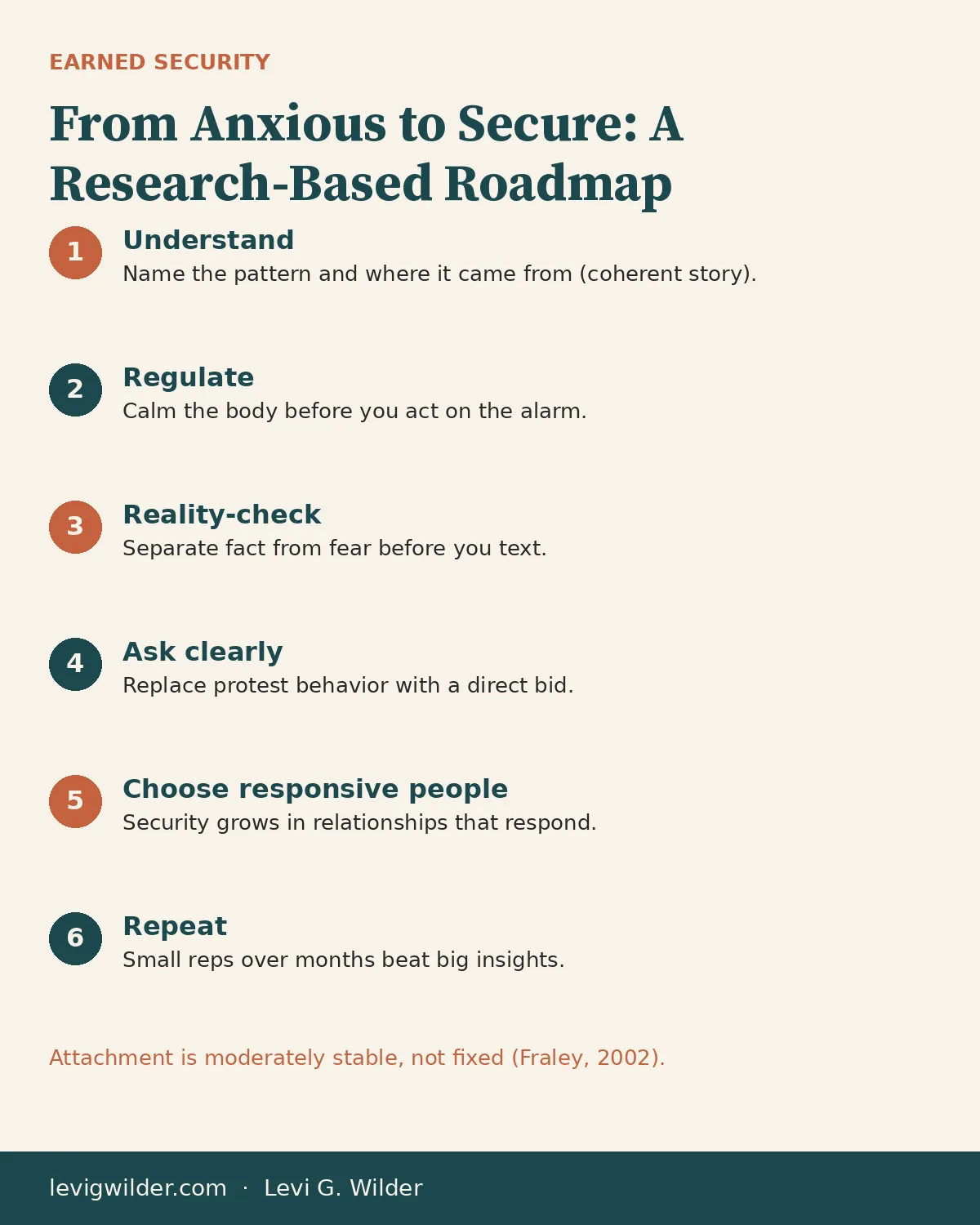
- Feelings high: start with emotion naming. Research on "affect labeling" suggests that simply putting a feeling into words can turn down the intensity of the brain's alarm response (Lieberman et al., 2007; Torre & Lieberman, 2018).
- Needs high: practice small, specific requests. People tend to underestimate how willing others are to help when asked directly (Flynn & Lake, 2008).
- Self-worth high: look into self-compassion practices. A meta-analysis of randomized trials found self-compassion interventions improved outcomes such as self-criticism, depression and anxiety (Ferrari et al., 2019).
- Self-care high: build tiny body check-ins into your day: hungry, tired, tense?
- Connection high: try sharing one feeling, not just one fact, with someone safe each week.
Why these patterns develop
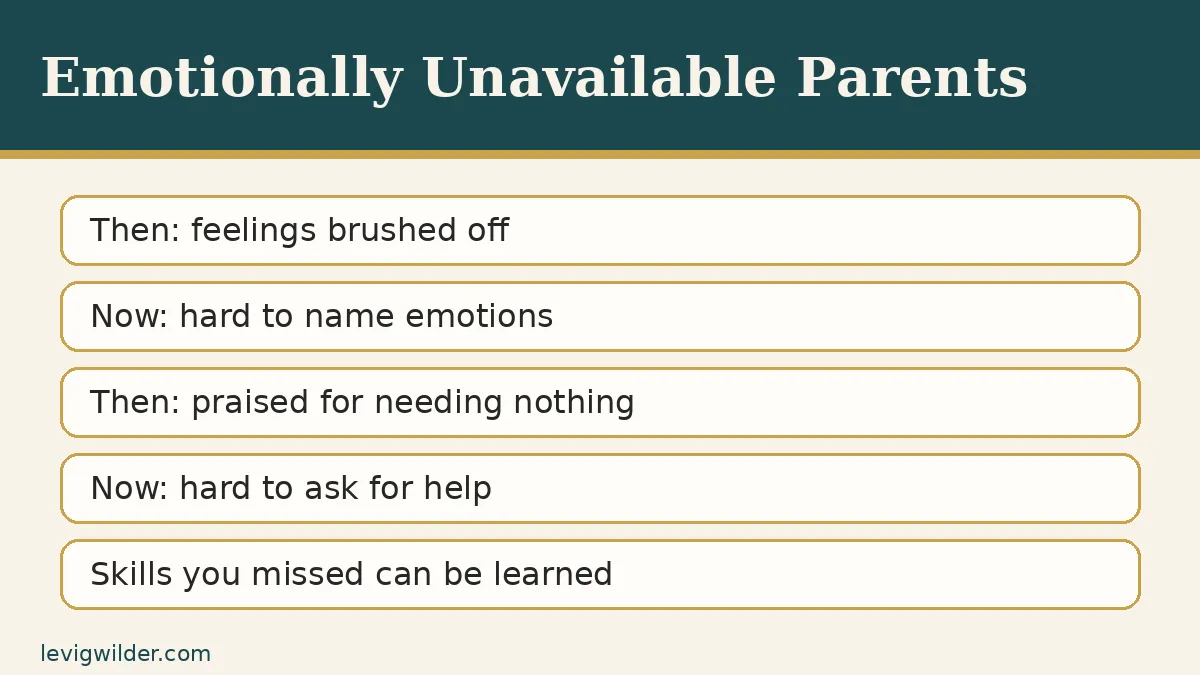
Children learn emotional skills through repetition with caregivers: someone notices a feeling, names it, and helps the child handle it. Researchers studying how parents shape emotion describe this "emotion socialization" as a key way children learn to understand and regulate feelings (Eisenberg, Cumberland & Spinrad, 1998). When that coaching is missing, kids adapt. They go quiet, become self-reliant, and stop expecting anyone to ask.
Emotional neglect is common. Self-report studies put it at roughly one in five people (Stoltenborgh et al., 2013). And while it has been linked with higher risks of depression and other difficulties (Norman et al., 2012), those are associations, not fate.
What to do next
- Write down your highest section and one example from this week.
- Pick one five-minute practice from the list above and do it daily for two weeks. Habits take time. One study found the average was about 66 days, with a wide range (Lally et al., 2010).
- Retake this self-check in a month. Notice changes in your pattern, not just your total.
If you want printable worksheets to go with this, the free companion pack includes a feelings list and daily check-in sheets. For the full, structured path, The Emotional Neglect Workbook walks you through all five areas with exercises built on the research above. Find it ebook on Google Play Books or get the printable PDF edition.
If at any point you feel unsafe or have thoughts of self-harm, please contact your local emergency number or a crisis line right away.
A note on reading your results kindly
When I first took a checklist like this, I did two unhelpful things at once. I argued with every high score ("everyone feels like that sometimes"), and then I used the total as fresh evidence that something was wrong with me. If you notice either reaction, pause. Both are very common in people who grew up without much emotional mirroring, because no one modeled how to look at hard information about yourself with warmth.
Try reading your answers the way a kind, curious friend would. Not "what's wrong with me?" but "what did I need to learn to survive, and what do I need to learn now?" A child who stopped expecting to be asked about feelings didn't fail. They adapted to the home they had. The adult reading this can choose differently, one small practice at a time.
It can also help to share one answer, just one, with someone you trust. Saying "I scored high on the needs section, asking for help is hard for me" out loud is itself a small act of the very skill the quiz measures. You might be surprised how often the other person says, "Me too."
Finally, remember what the numbers can't capture: your strengths. People with this history are often deeply reliable, perceptive about others' moods, and remarkably capable. Healing doesn't mean losing those qualities. It means adding the missing ones, like rest, help, and being known, so your strengths stop costing you so much.
FAQ
Is there an official childhood emotional neglect test?
Researchers use validated questionnaires, such as the Childhood Trauma Questionnaire's emotional neglect scale. Online quizzes, including this one, are for reflection only. A licensed professional can give a proper assessment.
Can I have emotional neglect if I had a happy childhood?
Yes. Emotional neglect often happens in caring homes where physical needs were met but feelings weren't noticed or discussed. Many people only recognize it in adulthood.
What does a high score mean?
A high score means you recognize many adult patterns that often follow emotional neglect. It isn't a diagnosis. It's a sign that exploring these patterns, ideally with support, could help.
How long does it take to heal from emotional neglect?
There is no fixed timeline. Many people notice changes within weeks of daily practice, while deeper shifts in self-worth and relationships usually take months.
Sources
- Baldwin, J. R., et al. (2019). JAMA Psychiatry, 76, 584–593. https://doi.org/10.1001/jamapsychiatry.2019.0097
- Bernstein, D. P., et al. (2003). Development and validation of a brief screening version of the Childhood Trauma Questionnaire. Child Abuse & Neglect, 27, 169–190. https://doi.org/10.1016/S0145-2134(02)00541-0
- Eisenberg, N., Cumberland, A., & Spinrad, T. L. (1998). Parental socialization of emotion. Psychological Inquiry, 9, 241–273. https://doi.org/10.1207/s15327965pli0904_1
- Ferrari, M., et al. (2019). Self-compassion interventions and psychosocial outcomes: A meta-analysis of RCTs. Mindfulness, 10, 1455–1473. https://doi.org/10.1007/s12671-019-01134-6
- Flynn, F. J., & Lake, V. K. B. (2008). If you need help, just ask. Journal of Personality and Social Psychology, 95, 128–143. https://doi.org/10.1037/0022-3514.95.1.128
- Lally, P., et al. (2010). How are habits formed. European Journal of Social Psychology, 40, 998–1009. https://doi.org/10.1002/ejsp.674
- Lieberman, M. D., et al. (2007). Putting feelings into words. Psychological Science, 18, 421–428. https://doi.org/10.1111/j.1467-9280.2007.01916.x
- Norman, R. E., et al. (2012). PLoS Medicine, 9, e1001349. https://doi.org/10.1371/journal.pmed.1001349
- Stoltenborgh, M., et al. (2013). The neglect of child neglect. Social Psychiatry and Psychiatric Epidemiology, 48, 345–355. https://doi.org/10.1007/s00127-012-0549-y
- Torre, J. B., & Lieberman, M. D. (2018). Putting feelings into words: Affect labeling as implicit emotion regulation. Emotion Review, 10, 116–124. https://doi.org/10.1177/1754073917742706
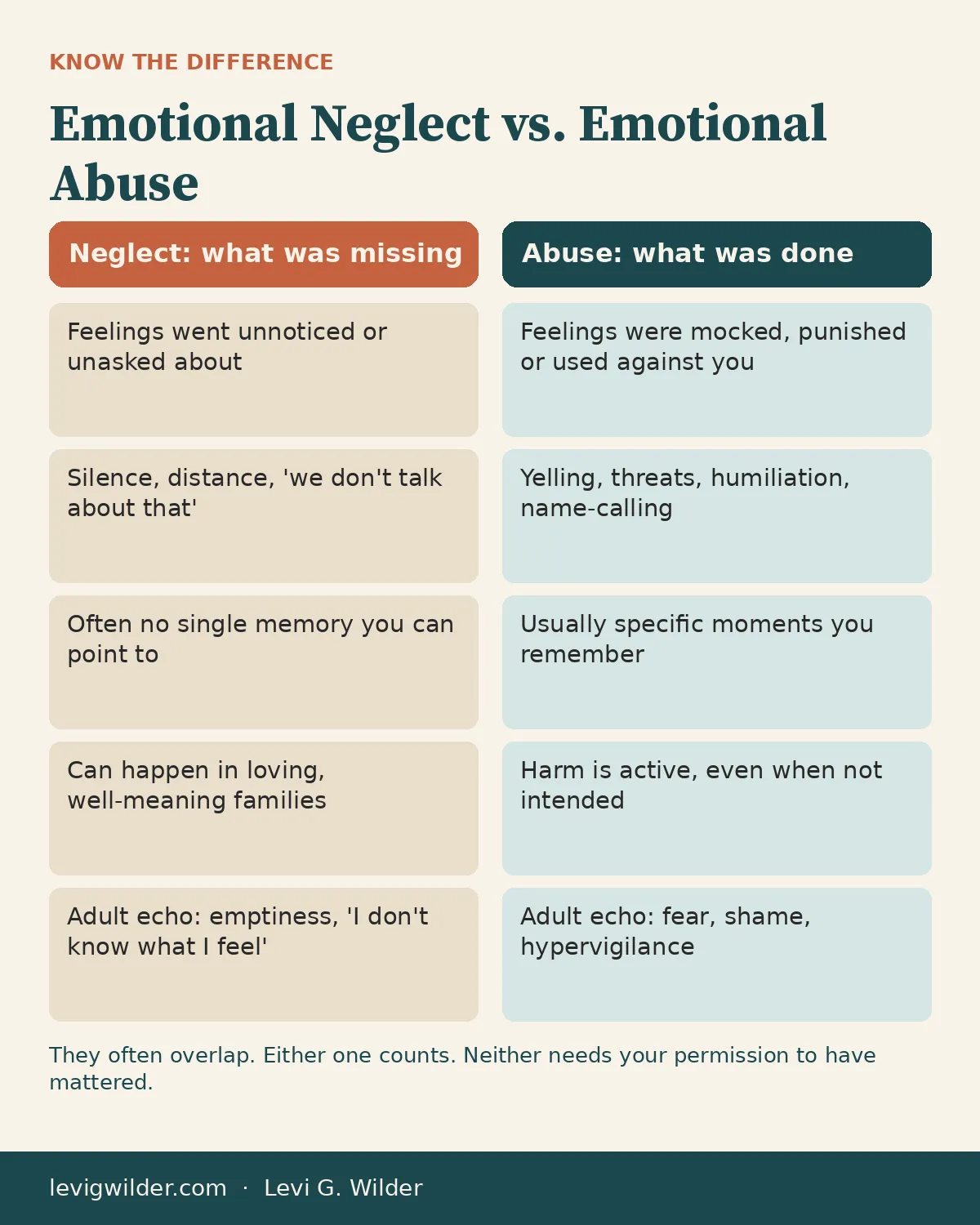
Related reading: Emotional neglect vs emotional abuse · Why do I feel like a burden?