Why Do I Feel Like a Burden to Everyone? The Childhood Root and How to Unlearn It
Childhood Emotional NeglectSelf-WorthAsking for Help
Quick answer
Why do I feel like a burden when I talk about my feelings?
Feeling like a burden often starts in childhood, when sharing feelings or needs led to distance, irritation or no response. Your brain learned to predict that others find you "too much" and keeps expecting it, even with people who care. You can unlearn it by noticing the belief, testing small requests and practicing self-compassion.
By Levi G. Wilder. I'm a researcher and survivor, not a therapist. If "I'm a burden" thoughts come with thoughts of not wanting to be alive, please stop reading and contact your local emergency number or a crisis line now. You matter more than this belief says you do.
Many people who feel like a burden apologize before every request. "Sorry, quick question." "Sorry to bother you." "No worries if not!" It can become so automatic that they barely notice it. Underneath the habit is often a belief that's hard to put into words: my needs cost other people something they'd rather not pay.
If you've ever wondered "why do I feel like a burden to everyone", whether it's your partner, your friends or your family, this post is for you. We'll look at where the feeling often comes from, why it's so convincing, and how to start testing it in small, safe ways.
What "feeling like a burden" actually feels like
It rarely sounds like "I am a burden" in your head. It sounds more like:
- "I'll just handle it myself, it's easier."
- "They have enough going on."
- "I don't want to make it a big deal."
- Feeling guilty after someone helps you, then over-repaying them.
- Telling a sad story as a joke so nobody has to sit with it.
- Feeling a wave of shame when you cry in front of someone.
From the outside, you look easygoing and independent. Inside, it's lonely.
Where the belief usually starts
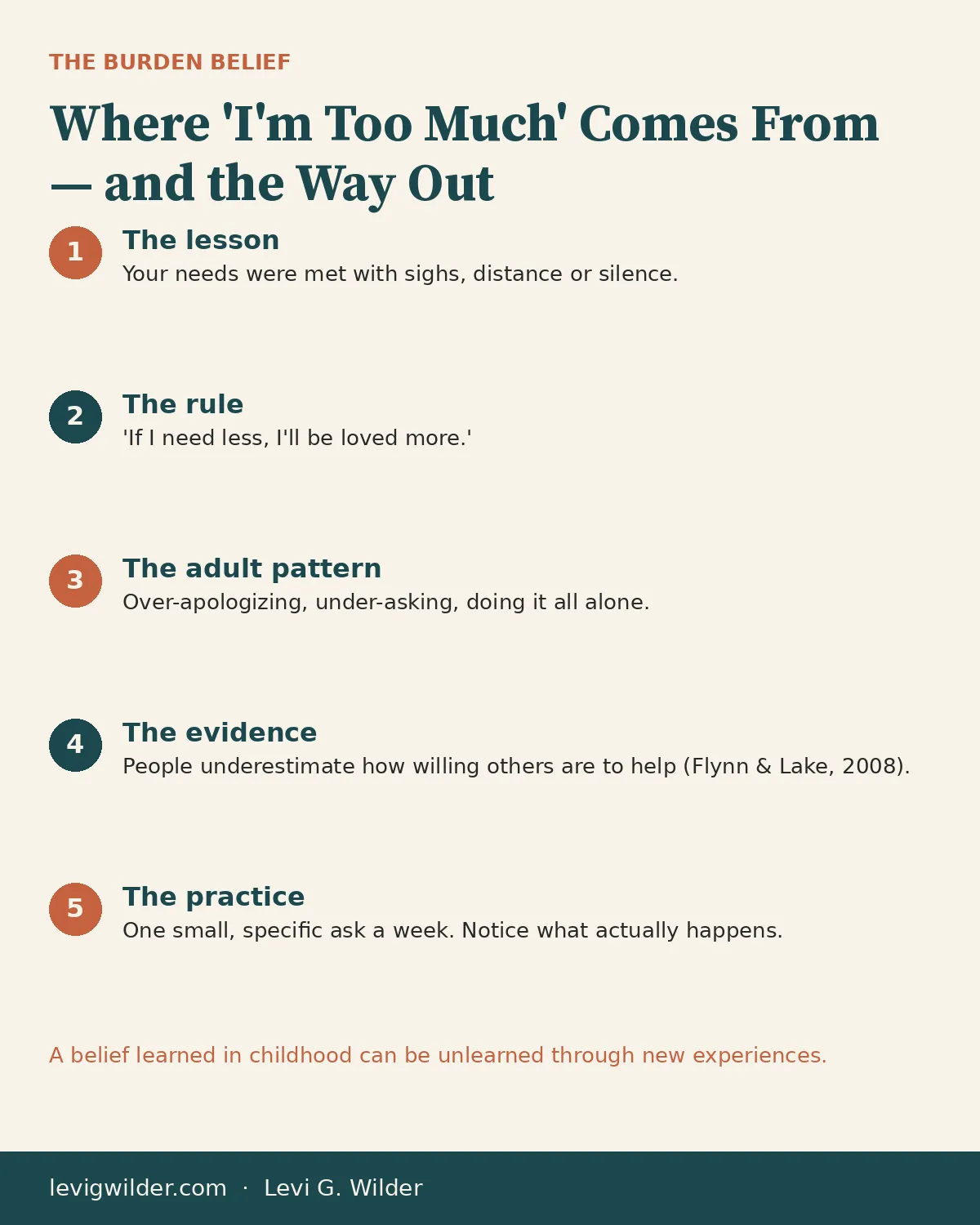
Beliefs about ourselves are learned, mostly from repeated experiences in childhood. When a child brings a feeling or need to a caregiver, the response teaches them something. If the response is warm and curious, the lesson is: my needs are welcome. If the response is a sigh, distraction, irritation or silence, often enough, the lesson becomes: my needs are a problem.
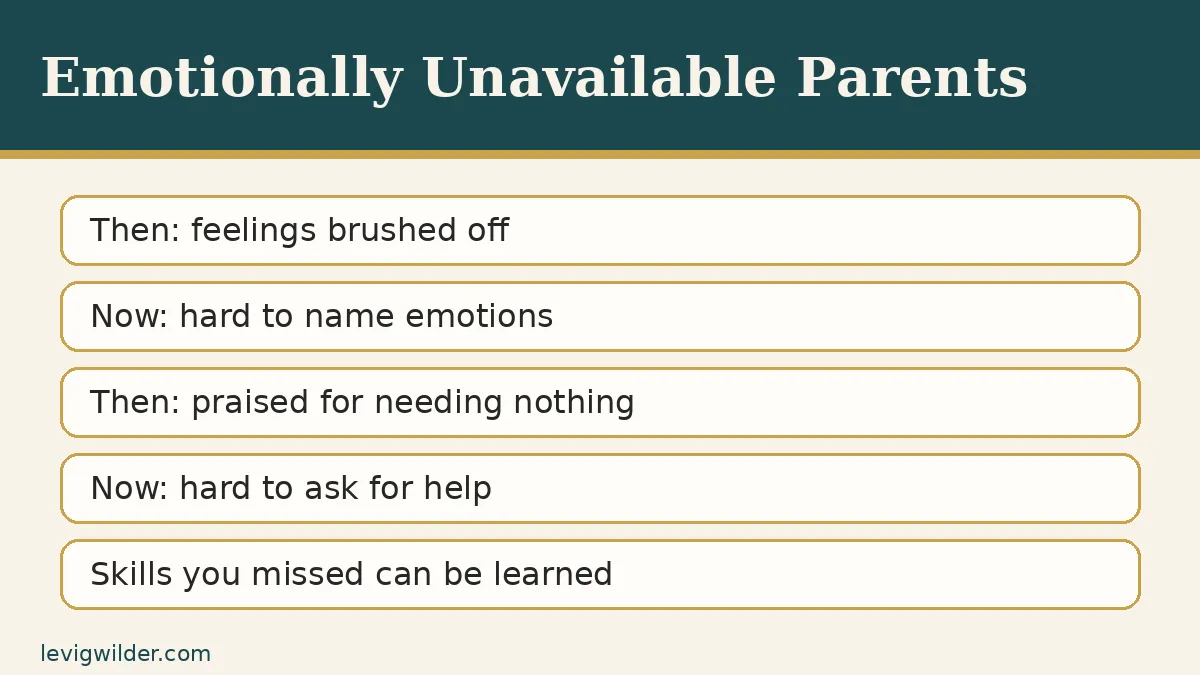
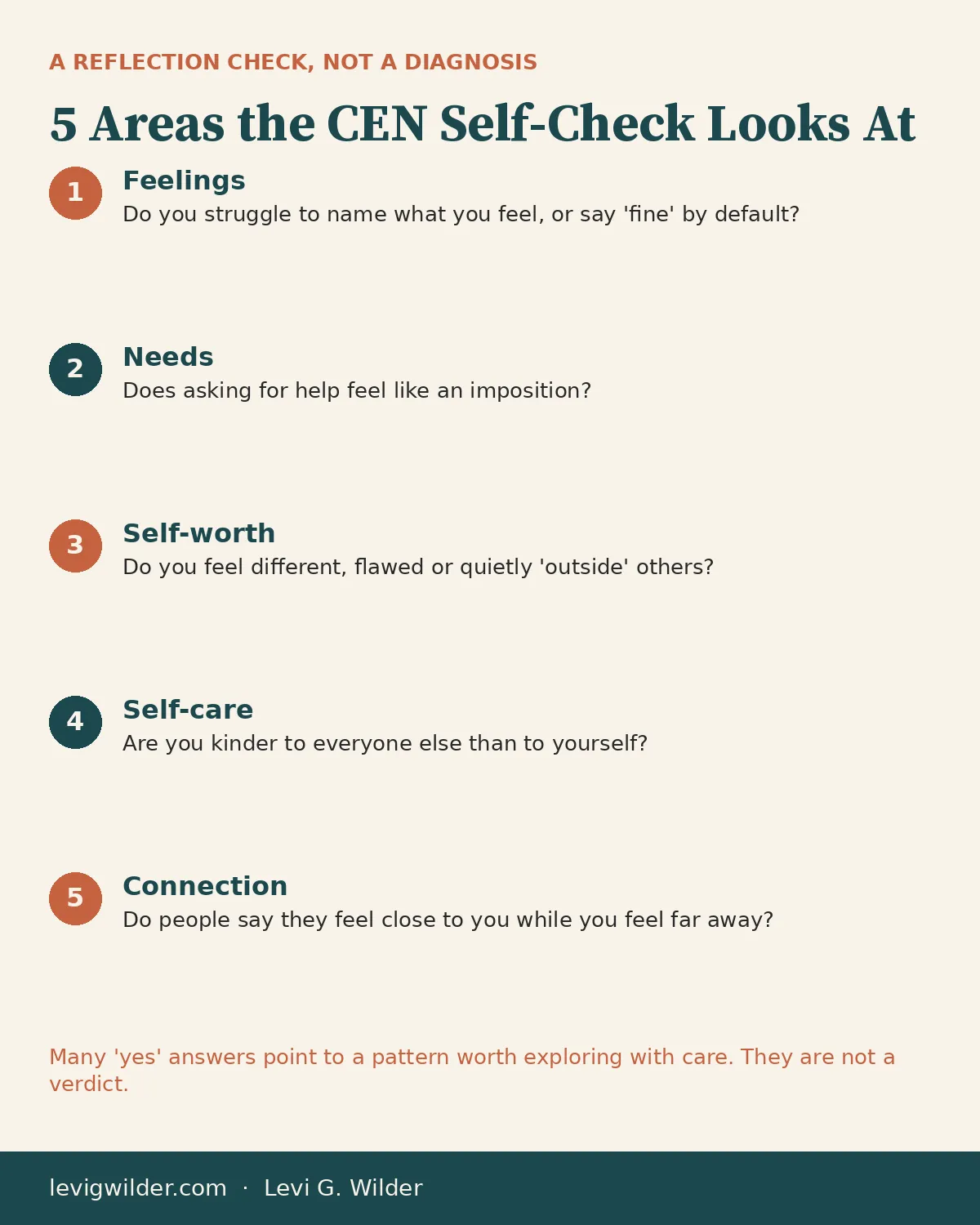
That's the core of childhood emotional neglect: a caregiver not responding enough to a child's emotional needs (Webb, 2012). It often happens in families where parents were overwhelmed, unwell, grieving or simply never taught how to respond to feelings. Nobody needs to say "you're a burden" out loud. The child figures it out.
The rule a child makes
Children are practical. If having needs leads to disconnection, the solution is to need less. The rule becomes: "If I'm low-maintenance, I'll stay loved." It works, in a way. The child gets praised for being "so mature" and "no trouble at all", which reinforces it.
What the research says
Schema research looks at deep beliefs like this. A meta-analysis of 33 studies found emotional neglect was strongly associated with the "emotional deprivation" schema, the belief that nobody will meet your emotional needs (Pilkington, Bishop & Younan, 2021). Most of the studies were correlational, so we can't say neglect alone causes it, but the link is consistent. Self-determination theory adds that people need relatedness, feeling cared for and connected, to thrive (Ryan & Deci, 2000). A child who learns to hide needs is protecting the relationship at the cost of that very need.
Why the feeling seems so true
The burden belief is convincing for three reasons:
- It was true once. In your childhood home, needs may really have strained a stretched system. The belief was accurate for that context.
- It's never tested. If you never ask, you never discover that people would have said yes.
- It reads neutral signals as proof. A delayed reply or a tired face gets filed as "see, I'm too much", while warm responses get dismissed.
The surprising evidence: people want to help more than you think
In a series of studies, Francis Flynn and Vanessa Lake asked people to predict how many strangers would agree to direct requests for help. Participants underestimated compliance by as much as 50% (Flynn & Lake, 2008). People focus on the cost of saying yes and forget how awkward and uncomfortable it is to say no.
If strangers help more than we expect, consider the people who actually care about you. Many of them aren't bothered by your needs. They're waiting for an invitation.
Feeling like a burden in relationships
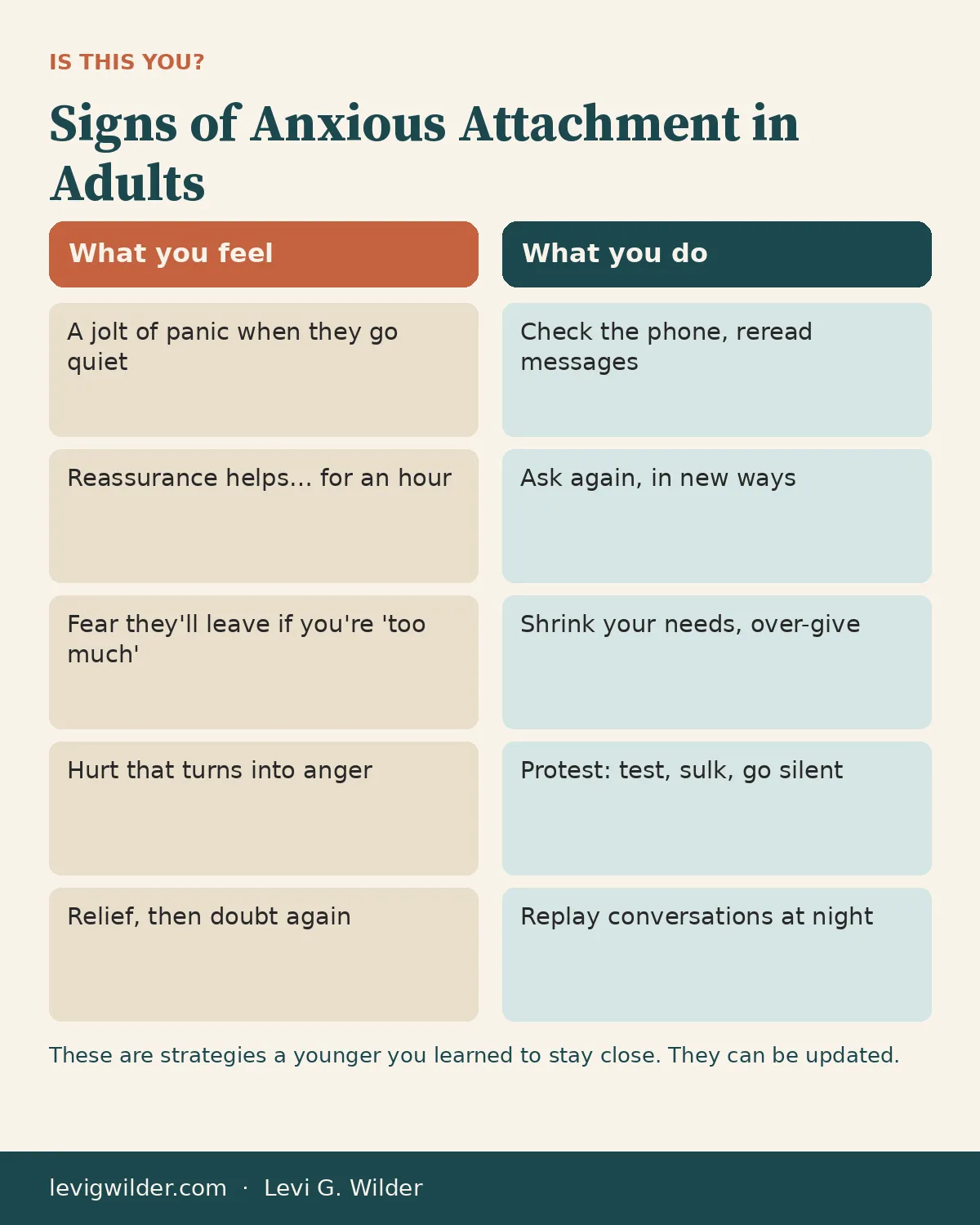
This belief often gets loudest with partners. You might hide hurt to avoid "starting something", or swing the other way: ask for reassurance over and over, then feel ashamed for needing it. Both are ways of managing a fear that your needs could cost you the relationship. That second pattern often overlaps with anxious attachment, which I explore in signs of anxious attachment in adults.
With family, especially parents, feeling like a burden can bring back the original lesson word for word. It's common to feel twelve years old again after one phone call.
Five steps to unlearn "I'm too much"
1. Catch the translation
For one week, write down each time you think "they have enough going on" or "I'll handle it myself". Next to it, write the real need underneath: support, company, advice, comfort. Naming feelings and needs in words is a skill in itself, and it tends to reduce emotional intensity (Lieberman et al., 2007).
2. Shrink the ask
Don't start with the hardest request. Start with something tiny and specific: "Could you send me that recipe?" "Can you walk with me for ten minutes?" Specific requests are easier to say yes to, and each yes is a small piece of new evidence.
3. Make a prediction, then check it
Before asking, rate how you expect the person to react (0 = annoyed, 10 = glad). Afterwards, rate what actually happened. Over a few weeks, compare the two columns. This is a simple version of the behavioral experiments used in cognitive therapy, and it lets your experience, not your fear, update the belief.
4. Drop one apology
Replace "Sorry to bother you" with "Thanks for your help" once a day. Gratitude keeps the warmth without framing yourself as a cost.
5. Talk to yourself like a friend would
When the shame wave comes after asking, put a hand on your chest and say something like: "It's okay to need things. Everyone does." Self-compassion practices have good support from randomized trials for reducing self-criticism and distress (Ferrari et al., 2019). It feels awkward at first. That's normal.
When it's more than a belief
Feeling like a burden can sometimes be part of depression, and in some people it's linked to thoughts of suicide. If you notice thoughts like "everyone would be better off without me", please treat that as a reason to reach out today, to a doctor, therapist, crisis line or someone you trust. That thought is a symptom, not a fact.
A gentle next step
If this post felt uncomfortably familiar, the free printable companion pack includes worksheets for tracking needs and practicing small asks. And if you'd like a full program, The Emotional Neglect Workbook has a whole section on needs, asking for help and self-worth. It's ebook on Google Play Books, or you can get the printable PDF edition.
What it looks like when the belief starts to shift
Change here is quiet, so it's easy to miss. Watch for small signs like these:
- You ask for something and the shame afterward lasts minutes, not days.
- You catch yourself mid-apology and swap it for "thank you".
- You let someone help without immediately planning how to pay them back.
- You tell a friend you're having a hard week, without turning it into a joke.
- You notice that the people who love you seem relieved, even glad, when you let them in.
Imagine someone who has always handled hard things alone. One day they ask a friend for a ride to a medical appointment, something they would normally do by themselves while pretending it was nothing. The friend says yes right away and adds, "I'm glad you asked." Small moments like this matter because they give the nervous system new evidence. The old rule doesn't disappear, but it gets harder to believe each time a real person responds with warmth instead of annoyance.
You deserve that kind of evidence too. You'll only get it by asking, and starting small is not cheating. It's how this works.
FAQ
Why do I feel like a burden when I talk about my feelings?
Often because you learned early that feelings led to distance or discomfort in others. The brain keeps predicting the same reaction, even with people who would welcome your feelings.
Is feeling like a burden a sign of depression?
It can be one sign, but not always. It's also common in people with emotional neglect or anxious attachment. If it comes with low mood, hopelessness or thoughts of death, talk to a professional.
How do I stop feeling like a burden to my partner?
Start by naming the specific need behind the feeling, then make small, clear requests rather than hiding needs or seeking constant reassurance. Notice how your partner actually responds over time.
Why do I feel like a burden to my parents as an adult?
Family relationships tend to reactivate childhood roles. If your needs once felt like a strain on your parents, those old expectations can return quickly in their presence.
Sources
- Ferrari, M., et al. (2019). Self-compassion interventions and psychosocial outcomes: A meta-analysis of RCTs. Mindfulness, 10, 1455–1473. https://doi.org/10.1007/s12671-019-01134-6
- Flynn, F. J., & Lake, V. K. B. (2008). If you need help, just ask: Underestimating compliance with direct requests for help. Journal of Personality and Social Psychology, 95, 128–143. https://doi.org/10.1037/0022-3514.95.1.128
- Lieberman, M. D., et al. (2007). Putting feelings into words. Psychological Science, 18, 421–428. https://doi.org/10.1111/j.1467-9280.2007.01916.x
- Pilkington, P. D., Bishop, A., & Younan, R. (2021). Adverse childhood experiences and early maladaptive schemas in adulthood: A systematic review and meta-analysis. Clinical Psychology & Psychotherapy, 28, 569–584. https://doi.org/10.1002/cpp.2533
- Ryan, R. M., & Deci, E. L. (2000). Self-determination theory and the facilitation of intrinsic motivation, social development, and well-being. American Psychologist, 55, 68–78. https://doi.org/10.1037/0003-066X.55.1.68
- Webb, J. (2012). Running on Empty: Overcome Your Childhood Emotional Neglect. Morgan James.
Related reading: Childhood emotional neglect self-check · Anxious attachment triggers