15 Signs of Anxious Attachment in Adults (and the Emotional Neglect Link Nobody Mentions)
Anxious AttachmentChildhood Emotional NeglectRelationships
Quick answer
What are the main signs of anxious attachment?
Common signs of anxious attachment in adults include fear of rejection, needing frequent reassurance, checking a partner's activity, overthinking messages, difficulty with space, and protest behaviors like repeated texting or going silent. It often grows from inconsistent or emotionally neglectful care in childhood, and it can shift toward security with practice and responsive relationships.
By Levi G. Wilder. I'm a researcher and survivor, not a therapist. This list is for self-reflection, not diagnosis.
When I first read a description of anxious attachment, I felt two things at once: relief that someone had described my inner world so exactly, and embarrassment that it was so obvious. The checking. The replaying. The way one quiet evening could undo a month of feeling secure.
If you're wondering whether you have an anxious attachment style, here are the signs I see most often, in dating, long-term relationships and friendships. Then we'll look at something most lists skip: why so many anxiously attached adults grew up emotionally neglected rather than obviously mistreated.
A quick, accurate definition
Attachment style isn't a box you're in. Researchers measure it on two dimensions, attachment anxiety and attachment avoidance, and everyone sits somewhere on both (Fraley, Waller & Brennan, 2000). "Anxious attachment" is shorthand for being relatively high on anxiety: worried about rejection, sensitive to distance, and hungry for closeness and reassurance.
The idea that adult romantic love works like an attachment bond goes back to Hazan and Shaver's 1987 research (Hazan & Shaver, 1987). In a nationally representative US sample, about one in ten adults described themselves with the anxious pattern (Mickelson, Kessler & Shaver, 1997). Many more have anxious moments without it running their lives.

15 signs of anxious attachment in adults
What happens in your mind
- You scan for signs of rejection. A change in tone or a delayed reply registers immediately, and your mind starts building explanations.
- You replay conversations. Hours later, you're still going over what you said and how they reacted.
- Reassurance helps, briefly. "I love you" settles you for an hour, then the doubt creeps back.
- You fear being "too much". You worry your needs will push people away, so you either hide them or feel ashamed of them.
- Your mood depends on the relationship. A good day with your partner means a good day. A distant one ruins everything.
What you do
- You check. Phones, last-seen status, social media, their location.
- You over-give. You do more, accommodate more and ask for less, hoping to secure your place.
- You protest. When anxious, you might text repeatedly, go cold, threaten to leave, or test whether they'll chase you. Researchers describe these as ways of trying to restore closeness (Mikulincer & Shaver, 2003).
- You struggle with space. A partner's alone time feels like rejection rather than a normal need.
- You move fast. In dating, you may feel attached quickly and start planning a future early.
In relationships and friendships
- You're drawn to people who are hard to reach. Unavailable partners can feel exciting. Consistent, available ones can feel strangely boring.
- Conflict feels like a threat to the whole relationship, not just a disagreement.
- You keep score of effort. Who texted first, who suggested plans, who said "I love you" more.
- In friendships, you fear being replaced. A friend's new friend can feel like a loss.
- You lose yourself. Your interests, friends and opinions shrink to fit the relationship.
Recognizing several of these doesn't mean something is wrong with you. Each one is a strategy that once made sense.
Signs of anxious attachment in dating vs long-term relationships
In early dating, anxious attachment usually looks like intense focus on the other person, difficulty tolerating uncertainty, analyzing every message, and feeling crushed by small signals of disinterest.
In long-term relationships, it more often looks like repeated reassurance-seeking, sensitivity to your partner's moods, difficulty with their independence, and conflicts that escalate because both people feel unheard. Research found that people high in attachment anxiety tend to seek reassurance excessively, which is linked with relationship strain and lower mood over time (Shaver, Schachner & Mikulincer, 2005).
The link most lists miss: emotional neglect
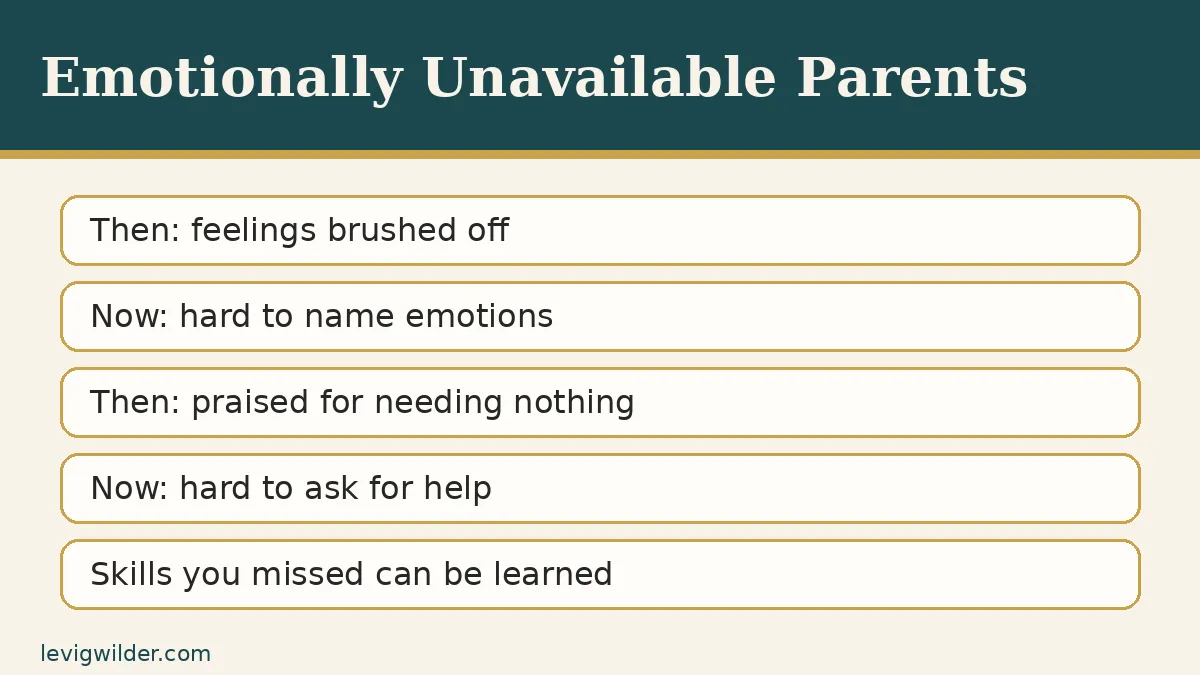
The usual story is that anxious attachment comes from inconsistent parenting: a caregiver who was warm sometimes and unavailable at other times. That's often true. But there's a quieter version I see constantly: parents who were physically present and caring, but emotionally hard to reach.
That's childhood emotional neglect: a parent not responding enough to a child's emotional needs (Webb, 2012). The child is fed, driven to school, maybe even praised for grades, but their inner world goes unasked about. Love is there, but being seen isn't.
A child in that home has two options. Turn the signal down and become self-sufficient, which leans toward avoidance. Or turn it up, by becoming highly attuned to a parent's moods and working hard to earn attention, which leans toward anxiety. Many people do both at different times.
The research backs up parts of this picture. Emotional neglect is common, reported by roughly one in five adults in self-report studies (Stoltenborgh et al., 2013). It's associated with the belief that nobody will meet your emotional needs (Pilkington, Bishop & Younan, 2021). And it's linked with difficulty identifying feelings (Ditzer et al., 2023). Put those together and you get an adult who wants closeness desperately, doubts it will last, and struggles to name what they actually need. That's the anxious pattern with an emotional neglect root.
Signs that emotional neglect may be underneath your anxiety
- You can describe your partner's feelings in detail but go blank about your own.
- Your childhood seems "fine", yet you have no memory of being comforted when upset.
- You feel unseen even when you're loved.
- Asking directly for what you need feels nearly impossible, so it comes out as protest.
If these fit, healing usually needs both layers: calming the attachment alarm and learning the emotional skills you weren't taught. You can explore the neglect side with this childhood emotional neglect self-check.
What helps
Learn your triggers
Knowing what sets the alarm off makes it less mysterious. I wrote a full guide to anxious attachment triggers and what to do in the moment.
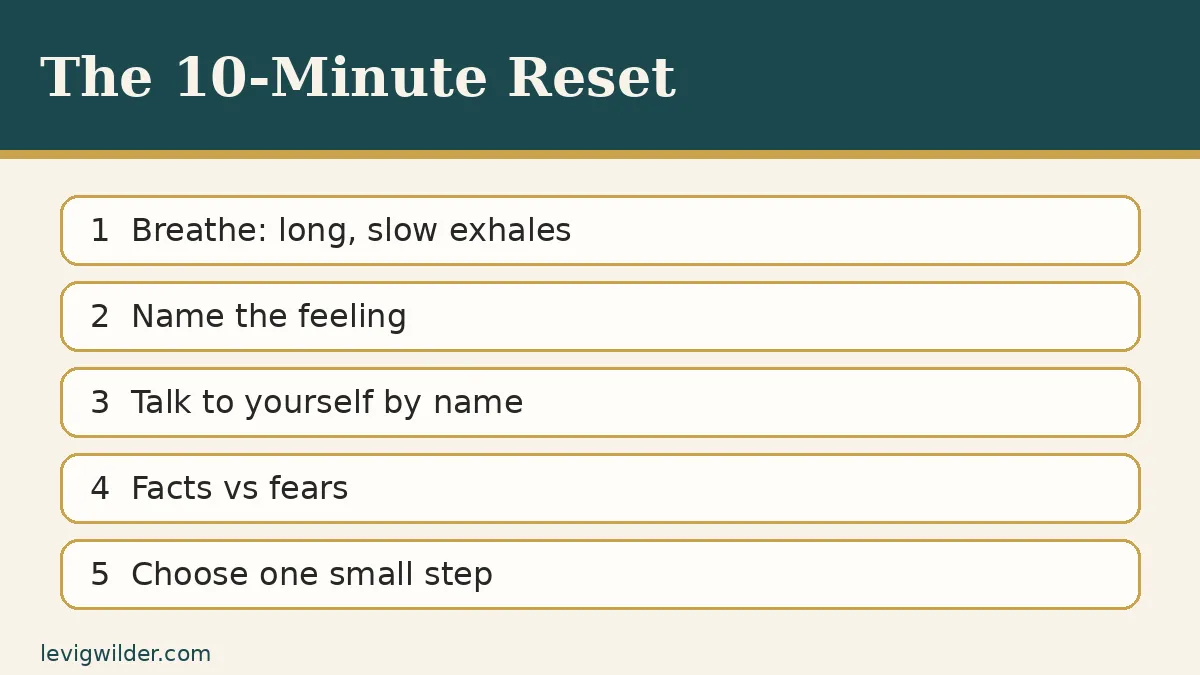
Name what you feel, then what you need
"I feel scared. I need to know we're okay." Putting feelings into words tends to reduce their intensity (Lieberman et al., 2007), and naming the need turns protest into a clear request.
Replace protest with a direct bid
Instead of going silent to see if they notice, try: "I missed you today. Can we have dinner without phones?" Direct bids are more likely to get the response you're hoping for.
Build security outside the relationship
Friends, routines, interests and self-compassion all spread the load so one person isn't carrying your entire sense of safety.
Consider support
Therapy can help a lot, and couples approaches such as emotionally focused therapy have solid research support (Wiebe & Johnson, 2016).
Your next step
Anxious attachment isn't a life sentence. Attachment patterns are moderately stable but can change, especially through relationships that respond reliably (Fraley, 2002; Arriaga et al., 2018). More on that in can anxious attachment be cured?
Start with the free Secure Practice Companion: printable worksheets and a guided calming script. When you're ready for the full program, Loved but Never Seen is the anxious attachment workbook I wrote for adults who grew up emotionally neglected. Get the printable workbook.
Anxious attachment in men and women
Anxious attachment shows up in every gender, though it can look different on the surface. Some research has found gender differences in how anxious and avoidant partners pair up and how stable those relationships are (Kirkpatrick & Davis, 1994). In everyday life, cultural expectations play a role: men with anxious attachment may hide it behind irritability, jealousy or overworking to "deserve" love, while women may be more likely to be labeled "needy" for the same underlying fear. Either way, the core is the same: a nervous system that learned closeness could disappear and works hard to prevent that.
If you're a man reading this and recognizing yourself, you're not alone, and you're not weak. Many of the readers who write to me about anxious attachment are men who were told early on that their feelings were a problem to solve quietly.
FAQ
What are the main signs of anxious attachment?
Common signs include fear of rejection, needing frequent reassurance, checking a partner's activity, difficulty with space, and protest behaviors such as repeated texting or going silent.
What causes anxious attachment in adults?
It is often linked to childhood caregiving that felt inconsistent or emotionally unavailable, including emotional neglect. Later relationship experiences also shape it.
Can anxious attachment show up in friendships?
Yes. It can look like fear of being replaced, sensitivity to slow replies, and worrying that friends are upset with you.
Is anxious attachment the same as relationship anxiety?
They overlap but aren't identical. Relationship anxiety can have many causes, while anxious attachment describes a consistent pattern of fearing rejection and seeking closeness.
Sources
- Arriaga, X. B., Kumashiro, M., Simpson, J. A., & Overall, N. C. (2018). Revising working models across time. Personality and Social Psychology Review, 22, 71–96. https://doi.org/10.1177/1088868317705257
- Ditzer, J., et al. (2023). Child maltreatment and alexithymia: A meta-analytic review. Psychological Bulletin, 149, 311–329. https://doi.org/10.1037/bul0000391
- Fraley, R. C. (2002). Attachment stability from infancy to adulthood. Personality and Social Psychology Review, 6, 123–151. https://doi.org/10.1207/S15327957PSPR0602_03
- Fraley, R. C., Waller, N. G., & Brennan, K. A. (2000). Journal of Personality and Social Psychology, 78, 350–365. https://doi.org/10.1037/0022-3514.78.2.350
- Hazan, C., & Shaver, P. (1987). Romantic love conceptualized as an attachment process. Journal of Personality and Social Psychology, 52, 511–524. https://doi.org/10.1037/0022-3514.52.3.511
- Lieberman, M. D., et al. (2007). Putting feelings into words. Psychological Science, 18, 421–428. https://doi.org/10.1111/j.1467-9280.2007.01916.x
- Mickelson, K. D., Kessler, R. C., & Shaver, P. R. (1997). Adult attachment in a nationally representative sample. Journal of Personality and Social Psychology, 73, 1092–1106. https://doi.org/10.1037/0022-3514.73.5.1092
- Mikulincer, M., & Shaver, P. R. (2003). The attachment behavioral system in adulthood. Advances in Experimental Social Psychology, 35, 53–152. https://doi.org/10.1016/S0065-2601(03)01002-5
- Pilkington, P. D., Bishop, A., & Younan, R. (2021). Clinical Psychology & Psychotherapy, 28, 569–584. https://doi.org/10.1002/cpp.2533
- Shaver, P. R., Schachner, D. A., & Mikulincer, M. (2005). Personality and Social Psychology Bulletin, 31, 343–359. https://doi.org/10.1177/0146167204271709
- Stoltenborgh, M., et al. (2013). The neglect of child neglect. Social Psychiatry and Psychiatric Epidemiology, 48, 345–355. https://doi.org/10.1007/s00127-012-0549-y
- Webb, J. (2012). Running on Empty. Morgan James.
- Wiebe, S. A., & Johnson, S. M. (2016). Family Process, 55, 390–407. https://doi.org/10.1111/famp.12229